Showing posts with label Health Tips. Show all posts

Thursday, 23 April 2015

THE TEETHING MYTH


In Nigeria as with many parts of the world, there are myths that exist considering certain medical illnesses. For starters, myths are age long widely held, but false beliefs passed on from generation to generation. Since I knew anything thing at all, I’ve about them. Many of them have found their bases in medicine itself, most times, misinterpreted. A few of such myths include;


  • Lying on the cold floor or staying in very cold environment causes pneumonia
  • Drinking cold water makes labour difficult
  • Taking a lot of sugar and sugary foods causes helminthiasis (worms)
  • You should drink 2.5 – 3 litres of water a day
  • Cracking your knuckles will cause early onset arthritis
  • Giving a child meat would make him a thief
  • Quickly applying salt and cold water or egg when scalded by hot water or steam prevents it from blistering or worse effects.

However, by far worse is the teething myth. It is the commonest I’ve seen in many paediatric clinics and by far the one with the most devastating effect. The belief is that an infant from 6 month to age develops diarrhoea, flu-like symptoms and sometimes fever when they are teething. They only show up at the hospital when the child either has a high fever, is vomiting of is dehydrated.


The purpose of this article is to dispel this myth and bring out the true reasons that these things happen at that age. It seems constantly teaching each mother as she walks into my consulting room has almost no effect, so kindly reshare to as many people and social networking platforms as possible.

The reason is simple really. From 6 months of age, certain events occur in the life of an infant that bring about the fever, diarrohea, flu-like symptoms and vomiting. They are;
  • They lose their maternal immunity and aren’t yet able to develop theirs.
  • They have started crawling about and can pick up objects, including those that may be infected and it goes directly into their mouths.
  • This is the age at which most of them are weaned. In the course of weaning, not many mothers can properly wash and take care of their bottles (which is why cup and spoon feeding is now advocated), and germs can hide in its many nicks and crannies, exposing the child to more infections.

So, the child has virtually no immunity to protect him, picks stuff from the floor and puts it straight in the mouth and he is being fed with bottle whose level of hygiene is highly doubtful. The first symptom that inadvertently appears is the diarrhoea, then others. The greatest fear about all this is the dehydration that might eventually lead to the death of the innocent infant.

Also, many drug formulations have been introduced into the market in Nigeria as usual to exploit the fears of these mothers and some have been known to cause renal failure.

So now you know the truth, please share and reshare and save the lives of many more children.

Tuesday, 14 April 2015

LEARN HOW TO SAVE A LIFE

Have you ever been in a class and you are wondering about the benefits of the particular lecture? Well, happens to me a lot, but not this time. This lecture wasn’t just about theory (talk and go), it was a practical class on how to save lives. As a doctor, it is my job description to save lives. I have seen people die, have resuscitated some and watched some die despite best efforts at resuscitating them, because in Nigeria, frankly, I don’t know if any hospital has a defibrillator and very few have a mechanical ventilator. Shocker right? Today I want to share with you an experience I had after learning about basic life support (not bragging) and I also would like to pass on this information to you as much as I can. (It is an extremely wide topic).

THE STORY:
She was a neonate and she had been on admission for many weeks because she was born premature with a very low birth weight. Finally she was doing well and gaining some weight and awaiting discharge. One day, she stopped eating and I happened to be the one on call that night. Following her symptom – we decided to rescreen for sepsis and treat accordingly. It was discovered that her PCV (packed cell volume – blood level) had also dropped. So in addition to antibiotics recommenced, we also transfused her. Our treatment didn’t seem to be having much effect on her. She just kept having apneic attacks (stops breathing) requiring persistent ambubagging, suctioning and CPR as her heart rate was also dropping. We did this the whole night. I’m talking about 10 hours straight on one child, alternating with the nurse on duty. Finally, at 6 am, it suddenly occurred to me that something could actually be obstructing her airways despite all our work. I picked her up, turned her around and instituted the anti-choking technique, repeating it about 4 times, then, I drop her back on the resuscitare. A few minutes later, you wouldn’t believe the thick mucus that found its way out of her mouth. The apnea stopped and less than 18 hours later she was crying for food.

LIFE SAVING TECHNIQUES:
There are many things that threaten our lives every single day, some we aren’t even aware of. The scariest of these are the ones that cause sudden death, one minute someone is talking to you, the next minute, they are gone. Sometimes, these situations arise in people that have health problems already like diabetes and hypertension. These are not techniques like cutting up someone’s throat in a restaurant because they are choking like Sandra Bullock did in “the heat” or even opening up the chest wall to let out air in a person with pneumothorax, Christina and her boyfriend from “grey’s anatomy” and Reese Witherspoon in “just like heaven” already showed us how. Lol.

Okay, first things first, Identify the problem. Is the person choking, gasping, unconscious? Are there any friends or family members around who can tell if the parson suffered from a previous illness and if they are on any medications? 

Note** you cannot save everybody by yourself, so if you are trying to help, also make sure that arrangements are been made to take them to the nearest hospital. It’s all about teamwork.

An unconscious patient: check if the pulse or heart rate and the respiration are present.
  • If there is no pulse rate and no respiration, check the eyes for papillary reflex. The pupils are the small, round black part of the eye inside the cornea. The cornea can be black, brown, blue or green. Normally, when light is applied to the pupils, it reacts by constricting. In a dead person, the pupil is dilated (i.e. wide open and there is no reaction). If the pupils are dilated, there is no need resuscitating as it shows that the person is brain dead. Well, at least in resource poor countries where we don’t have life support machine to place a person on, and if we did have, it would be a strain on the family’s pocket.
  • If the heartbeat is present and/or dropping, and there is no spontaneous respiration, commence CPR (cardio-pulmonary resuscitation). CPR involves doing chest compressions and breaths to the person. Breaths could be given with an ambubag or mouth-to-mouth. 30 chest compressions to 2 breaths in an adult and 15:2 in infants. When giving the breaths make sure that the chest wall rises up. Continue until help comes.

Wikimedia.com
  • An unconscious diabetic: better to assume that the unconscious is from hypoglycaemia (low blood glucose). Just give the person a cube of sugar or a bottle of coke and rush to the nearest hospital. This is because hypoglycaemia kills a person faster than hyperglycaemia (high blood glucose).

In a choking adult, do the Heimlich’s maneuver.
  • Wrap your arms the person from behind, with one hand firmly holding the other in a fist. Place your folded hand between the stomach (above the umbilicus) and the chest (just below the xiphisternum). Place the person’s legs at “at ease” position, and your right leg in between theirs. Then thrust upward to dislodge the object.
Thefreedictionary.com

  • In infants, sit on a chair with your left leg slightly extended at the knee joint to about 100 degrees. Place the child on your left arm resting on your left leg, tilted head down and smack on her back 5 times, turn her over face up on the right arm and apply 5 chest compressions with the index and middle finger of the left hand. Check to see if the object comes out. If it dislodges, remove it, if not, repeat the process.
Photo credit: smmhc.adam.com


Where to check for pulses:

There are so many places in the body where the pulse rate can be palpated peripherally, however, with rapid decompensation, the body focuses blood supply to the vital organs like the brain, heart and kidneys and withdraws from the periphery like the legs. In these instances, it is better to check for the heart rate in these parts;
  • The radial pulse is at the outer part of the wrist (same side as the thumb).
  • The carotid pulse at the junction between the base of the mandible (jaw) and the neck.
  • The heart rate on the left side of the chest. It is usually the last to disappear. Though very rare, some people have their hearts on the right side

I hope you would be able to save some lives with this information.

Cheers……

Thursday, 9 April 2015

HEALTH INSURANCE WAHALA

I have to warn you, this is a very lengthy post. There was no way to get around it.

Something happened in the hospital last week and I'll like to share my thoughts on it. It’s about the health insurance scheme; however, before I go on to spill my guts, I’d like to share with you some facts about NHIS in Nigeria at least. Also, for the purpose of this post, I’ll stick with the patients on capitation; they are the ones mostly with the issues


A BRIEF HISTORY OF HOW IT WORKS

The National Health Insurance Scheme (NHIS) was started as a means to provide health care at affordable cost for all. It is meant to help many underdeveloped and developing countries to meet the goals of primary health care and now the millennium development goals (MDGs). In the United Kingdom, it is referred to as the National Health Service (NHS). A brief run-down of how it's practiced here in Nigeria to help you better understand the events that unfolded last week.

  • First, the overall governing body, NHIS can't do it alone. They encourage individuals and corporate bodies to set up health management organizations (HMOs) to help recruit clients.

  • The HMOs solicit for clients and gets them to register under different groups depending on the capability of the client (as per their monthly income). The clients are called enrollees and they are entitled to have a spouse and 4 children under them.

  • Some of the clients register under NHIS using the HMOs, while other register directly under NHIS. These are the ones that a capitation is paid for. The capitation in Nigeria is N750 per head per month. That's about $4 for health each month. (It's better now, used to be N500 - almost $3). This amount is paid to the hospital every month whether or not the enrollees show up for treatment.

  • There are other clients who prefer to register as private patients under the HMOs and their treatment is paid for only when they or their beneficiaries come for treatment. This is called "fee for service".

  • The NHIS also has a drug list, so you are limited to prescribing those drugs to the patient (and they are not necessarily the best in the market or that which you would prefer to prescribe). For example, the drug in the NHIS essential drug list for the treatment of malaria is Chloroquine, which is very obsolete. The current drugs are the ACTs (Artemisinin combination therapy).


  • Depending on your (the patient's) designation, mostly those on capitation, you may be limited to the extent of care the HMO can cover for.


On the part of the NHIS and the HMOs, they use the drug list to checkmate fraudulent activities of some doctors who may want to prescribe unnecessary investigations and branded drugs when it’s not recommended. Secondly, the N750 paid per head is paid under the assumption that not everyone will show up every month, and so the money for the people who didn't show up will cover for those that did and leave the hospital some change as profit.

Now, most hospitals are in the business to make a profit (even though the world thinks it should be a charity organization), they have to make the patient feel cared for while following the NHIS guidelines. Many decided that only certain necessary investigations and drugs could be prescribed for the patients. If they had more problems, they could be referred to the consultants or an approval code gotten for them.

On the other hand, the patients feel that a lot of money is being collected from their salary every month and that they have to make use of it somehow. So, you have some of these patients come to the hospital when there is absolutely nothing wrong with them so they can collect medicines. I’ve seen parents show up with 3 children jumping about the waiting room and throwing back-dives, and when asked what the problem is, the children usually answered “nothing” innocently, while the parents hush them and say all of them have cough and catarrh and they have to be treated for malaria. Problem is, they aren't told the actual amount pay per head per month.

*Yawn!*

Now away with all the boring information and to the events that took place last week. I saw a pregnant lady who was very ill requiring admission, but she didn’t want to stay because she had a toddler at home with no one to cater for him. I was caught between the devil and the deep blue sea on this one, I couldn’t go all out and do all that was necessary for her, (an admission would have covered that, but she declined). I couldn’t render half treatment either. To refer her wouldn’t have made much sense either since it was a primary case. So, I chose to stand in the middle, trying to give the patients my best, but also trying my best not to break the rules in doing so. I used the approval code for her. My decision to stand in the middle almost didn’t pay off, infact it almost got me into trouble with the hospital management. However, after much explanations, it was sorted out.

The conclusion I came to was that "managed care is not meant to manage (treat) the patient, it was made to manage their money". If all this mumbo – jumbo I just wrote didn’t make any sense to you, I recommend you watch the movie John Q.

In the meantime, what does you think of health insurance policies?

Tuesday, 24 March 2015

10 Ways You MUST Protect Your Kidneys

About 2 months ago, we lost a renowned Nollywood actor, Muna Obiekwe,  it was a very sad story. Prior to that we had lost a renowned radio talk show guy, Chaz B, who had touched the life of so many people including myself as I drive home from work every evening. While I pondered on the cause of their demise, 2 days later, I got a shocking news of the death of my brother in-law, from the same cause. It is a disease that is sweeping over Nigeria and many parts of the world and taking away our young vibrant youths who make the mistake of crossing it's part, knowingly or unknowingly. It is called KIDNEY DISEASE! A friend of mine informed me of a walk against kidney diseases they held on Saturday in Lagos and I decided it was time to complete and post this article.

It is alarming the rate at which kidney failure is been diagnosed at the hospital these days, if a kidney function test were to be done for every 20 patients that enter the emergency room, at least 1 would have a deranged result. I wondered why this disease was becoming so rampant these days. Is it because we now have the technology to make the diagnosis? I sincerely don't think it has much to do with it. I think it has a lot to do with our fast lifestyles and lack of proper knowledge about the disease especially in a country  like Nigeria where people leave all issues concerning their health solely up to the doctors, or are still attributing every illness to an any in the village for which they have to battle spiritually in the church, or even making wrong choices when they do seek orthodox care. (This article will tell you what I mean).


The kidney like many organs in the body can come down with a lot of diseases ranging from acute (usually reversible) to chronic (irreversible). These numerous diseases can arising from many causes. In medicine, they are divided into pre-renal, renal and post-renal causes, (renal simply means kidney). Pre-renal is any cause that arises before the kidneys, like in the blood vessels, hypertension and dehydration are good examples. Renal involves problems arising from the kidneys themselves, like polycystic kidney disease, acute glomerulonephritis e.t.c. While post renal diseases are those that cause kidney diseases from anywhere after the kidneys e.g. any form of obstruction of the urinary tract e.g. ureteric stones.

For the sake of this post, I'd concentrate on some practices that we carry on with without knowing their implications. For example, while hypertension has been regarded as the biggest culprit in causing kidney diseases, did you know that kidney problems is the number suspect if you meet a young person (below the age of 40 years) with an unusually elevated blood pressure?  So, it is possible that the kidney problem caused the hypertension and not the other way round. It is also possible that something else caused the kidney problem which then caused the hypertension. There are some chronic diseases other than hypertension that have been implicated in causing major kidney wahala. The commonest of them with us in Nigeria are diabetes mellitus and HIV/AIDS.

What is your drinking water habit like? What harmful practices do you indulge in that could cause constant dehydration for you? Let's say alcohol consumption for example. In the days our parents, they drank on occasion, during parties and all. Maybe they didn't have the money to spend or the alcohol wasn't readily available, or maybe it was just their way of life. Then, anyone sitting in the beer parlor night after night was seen as a drunkard. Today, it is a way of life. Everybody wants to "hangout" and have fun. Well, let's hope the music doesn't change while the fun is on going. Other than that, drinking water is very essential. Had an experience while I was in my second year. I developed serious backache (sides of my back) and was taking paracetamol as relief. I thought it was stress of sitting down for long hours. After 1 week, I complained to a senior colleague who asked about my water consumption. To tell you the truth, I took less than 1 liter of fluid per day. He simply went to the nearby shop, and bought 3 liters of water and asked me to finish it immediately. I can say it wasn't funny at all but I had to do it. Within an hour, I urinated 2 times in one hour and that was the end of that pain till date. Drinking water aids in the flushing of waste products from the body and in the prevention of stones formation.

These days, our diet has moved from home food to fast food, and fast food means more meat. Imagine eating a quarter of a chicken. It didn't used to happen. It may be value for your money but what about on the long run. Don't forget it is the kidney that mostly has the job of flushing out toxins from the body. Also, proteins are not stored in the body,  when you breakdown proteins, you get nitrogenous waste. These nitrogen help in the formulation and accumulation of BUN which is what we look out for in the kidney function tests.

Often and often, I see ladies who come to the dermatology clinic with trivial skin complaints. They don't want a spot they acquired at age 10 anymore. They want smooth, shiny skin, and they want to be light in complexion. Many young men are following the trend now. They call it toning. I call it bleaching. Simply, understand this, any substance that is strong enough to change your skin color can definitely do some damage to your organs.

When was the last time you have sorethroat and actually treated it? And I don't mean with strepsil. Sorethroat may simple enough but can be very deadly if left unattended. Did you know that the organism that causes the sorethroat can react with your antibodies (immune system) and form a complex substance that gets deposited on the kidneys and heart leading to bigger problems. What about malaria or a urinary tract infection? Did you know that their complications include renal disease? When was the last time you bought pain killers over the counter? They have also been implicated, especially those like ibuprofen, diclofenac e.t.c. Don't go seeking for the cure of every little thing that happens to you in the hands of a spiritual healer, some of their herbal mixtures are toxic. Even heard blue holy water is equally toxic. It contains copper. Be weary of the use of aloe vera. The research of its uses is not totally done yet.

Now that you know a little bit more about kidney diseases, what can you do to prevent them? Well, keep reading to find out.
  • Check your blood pressure regularly.
  • Check your blood sugar and HIV status.
  • Drink adequate amounts of water. A 70kg man requires 3 liters of fluid per day.
  • Watch your diet and reduce your animal protein intake.
  • No need to "tone" or "bleach", be comfortable in your own skin.
  • Treat any sorethroat, malaria, or any form or infection properly.
  • Beware of using and buying over the counter drugs. Go to the hospital instead.
  • Beware of herbal mixtures.
  • Aloe Vera leaves aren't meant for your consumption please.
  • Do a kidney function test!!!
Finally, some kidney diseases are idiopathic. There may be no identifiable cause. I leave you with one advice. Take charge of your health/life. Most kidney disease don't have symptoms until it's too late. Acute renal failure and acute kidney injuries can be reversed only if they haven't lasted beyond 3 months. Do a kidney function test today. Prevention is always better than cure.

Cheers......

Monday, 23 March 2015

PENNY WISE, POUND FOOLISH

So many times, we have either heard of, or used the popular idiom; "penny wise, pound foolish". We have also heard of, and used this one too - "a stitch in time, saves nine". They mean basically the same thing - do the right thing now and avoid future complications. So much goes on in our daily living, and also in the hospital (where I spend most of my time), requiring us to constantly make decisions. Sometimes, we make the right ones, sometimes, we make the wrong ones. Other times, we just make the foolish ones.

A day doesn't go by, that I don't see at least 10 patients (especially in the pediatrics clinic) who have been to the patent medicine dealers, or some other form of healer for health counsel before showing up at the hospital for the doctors' advice. On many occasions, it is too late for the advice they seek.


Let me give you a typical example of some of the experiences I've had. A woman calls up a doctor she knows. She had gotten the number on a day her child was very sick, and she was scared and desperate. She didn't want to go home and be stranded should something that she couldn't handle come up during the course of treatment. 2 months later, the child develops a fever. She calls up the doctor and narrates the present condition of the child. The doctor politely tells her that she was not in town at the moment , but that she should take the child to the nearest hospital for early diagnosis and treatment. Guess what? She replies 'okay' then takes the child to a chemist, where some medications including the injectable forms were adminster to the child by the attending personnel. She didn't know the name of the medications.

2 days goes by, and she calls the doctor again to complain that the fever was not abating and that the child was now vomiting. One simple question by the doctor gave her up. She was asked "madam what did the doctor at the hospital tell you was wrong with your child?" She confessed that she had actually gone to the chemist and not the hospital. She was adviced to make sure she goes immediately to the hospital for expert care. She agreed to do so. Another call the next day revealed that she had opted for a maternity instead and was still there as at the time she was making the call. The nurse did a PCV test and gave more injections. The poor child was still burning up.

After much talk by the doctor. She presented at the hospital without much funds required to treat the child. She had used whatever little she had to undergo sub-standard treatment at  the other places she had been to. A donation had to be done among staf and other patient relatives present to save the child's life. This is a good example compared to others that are brought in gasping or already dead.

I began to ponder at the possible causes of such a behaviour among people and I have come up with these few reasons.

  • Ignorance: a lot of people simply do not have the information they require to make sound decisions. Many causes and outcome of diseases are still based on spiritual beliefs and hearsay. The problem with hearsay is that the information been shared is never accurate.  It is usually reported from the person's own perspective after adding sugar and spice and the tale spins on. A typical example is when a patient tells you that they have had antimalarials, then you ask for the specific one and they reply amoxyl.
  • Spirituality and beliefs : Nigeria is a country in which many people including myself belief that there are principalities and powers. However, turning to a spiritual healer everytime there is a minor health disturbance and labelling it "an attack" may not be very helpful. Imagine a child has malaria and develops a distended abdomen because of the enlargement of the liver and spleen and instead of coming to the hospital,  the child is taken to one "baba" who cuts the abdomen into different designs in the name of letting out the "bad blood" that is causing the distension. They usually applied herbs mixed with dirt to the wound, so that by the time I'm seeing  such a child, I'm no longer treating just malaria but sepsis too. The annoying part, the parents usually want you to perform a miracle.
  • Wrong advice from friends and family members: charity, they say begins at home, well, so does learning and trust. We tend to believe and trust people we've known over a period of time than a doctor (with all his knowledge) that we just met. It is a normal reaction than doesn't yield the best result sometimes. A grandmother who tells you to put pepper and oil into the eyes of a8a convulsing child, is telling you what she knows/thinks and with love but it might just help to blind the child.
  • Poverty: I believe this is another very important factor that is easy to explain. If you don't have a dime, and you don't a good lending record, then you can't get the proper help most times. Simply because the hospital will ask for money first. They have learnt to do so because of the bad experiences they've had. 
My recommendation, poverty alleviation and public enlightenment. Never easy jobs to take on. So my advice, seek the best when looking for solutions to any problem you might have.

Cheers.....


Tuesday, 10 February 2015

BLOGGING FROM A - Z APRIL CHALLENGE

So, I entered into a blogging challenge. I have never done one before, not even a blog hop. This one though caught my attention and initially it was a bit tricky to figure it out. It is about blogging with topics from A – Z for the month of April. You also have to choose a theme to blog about e.g. if you decide to blog on food for the challenge, you’d write about recipes and cooking e.t.c. for the whole month. So, for someone like me who writes on many random topics, this is already a challenge (I even left a comment complaining about this on the website that features the challenge). 


Anyway, the more I thought about it, the more I wanted to do it. (Maybe I’m a bit competitive). So, I started thinking of what theme to go with. Initially, I thought I’d go for décor, food or fashion, but it was too plain for me. Besides, I could never think of enough topics to write on for an entire month, (felt exhausting trying to figure the topics out already). I decided to go with my niche (in real life), medicine, but then, I felt it would be so me. Finally, I settled for my daily experiences. It could be fun I thought. (I have enjoyed writing my few posts under the label “daily experiences" already). I realized at this point that most of my time was spent in the hospital and as such, my daily experiences were going to be mostly about hospital stuff. With a smile (like the cat that got the milk), I knew I had my theme for the blogging challenge – MEDICAL DRAMA. 

That sounds fierce right? Anyway, that is what I came up with. I won’t be anything like what you are used to watching on TV though. Nothing like grey’s anatomy or house or scrubs, but I’ll do my best to keep you entertained. It would be me, relaying daily experiences or just my experiences in the medical field so far, also of people in the hospital. These people could include me, my colleagues, other members of the health team, and sometimes even patients (identities withheld of course). It would be stuff worth writing and reading about too.

I sincerely hope I can finish this challenge. I also wish you would come on this journey with me and share the experience, every step of the way. Ok time to go, fingers crossed, wish me luck. To join the challenge, click here. It's going to be so much fun! Already, there are over 500 blogs signed on.

Cheers....


Sunday, 8 February 2015

THE MOST DANGEROUS STORAGE CONTAINER

Hello everyone,

Sorry for the prolonged silence, (wasn't my intention). I have been so busy planning the nuptials of my brother that took place yesterday. Remember him? He celebrated his traditional marriage last December. Like I always say, I think it's only in Nigeria that you have to get married 2 -3 times before you realize that indeed, you are married. Lol. Anyway, will be giving you a detailed analysis of the wedding as soon as possible, so watch out. Today however, I just had to make out time to post this. It is sad, but we must learn from other people's experiences.

How often do we go out to get one form of container or another to store items in our homes. Many of us have various kinds of containers for different objects. For people like me who are organizational freaks, we even have containers for some of these storage containers. That's awesome. However, certain containers are not made to be used as storage cans and most definitely not for certain materials. I decided to go ahead and write a bit on this topic because of some events that happened in the hospital recently. About a month ago, I managed a child that had ingested insecticide. Throughout the period, I was so afraid of the possible complications that could arise. Luckily, he scaled through. When it looked like we could take a breather, just last week, another child was rushed into the emergency room. This one had ingested kerosene!


How? You may ask, did these children come in close contact with these dangerous fluids, up till the point of drinking it. The answer is very simple really, especially if you have had to store kerosene before. These children simply drank what they thought to be water because these fluids were stored in water bottles and then kept within or in close proximity to the kitchen. The brain of a child doesn't work like that of an adult. They function by recognizing something and attributing a meaning to it. It's just like when you carry a baby that isn't yours. A neonate would simply turn his head towards your boobs when it's hungry, while an infant who has recognized his mother would continue to cry until you hand him over to his mother.

This second child wasn't as lucky as the first one, she developed pneumonia 2 days after admission, and a whole lot of issues. Further investigation into the matter brought more to light. I realized that as with many health myths in Nigeria, ingestion of any poisonous substance also has its myths and practices. The commonest of these practices is inducing vomiting after the child has been noticed to have ingested a poison. Please!!!! I beg you, don't do that. Inducing vomiting for a substance like kerosene or a corrosive substance like caustic soda would worsen rather than better the person's condition. The reason for this is simple, kerosene is very volatile and can easily be aspirated into the lungs leading to many complications. Corrosives just burnup the digestive tract.

To avoid such disasters, do the following; 
  • DO NOT store clear nonedible fluids like kerosene,  methylated spirit, or their like in water bottles. Labelled or not, home or hospital. A colleague of mine almost drank methylated spirit at work.
  • Use appropriate storage cans for such substances and label them neatly. 
  • Keep them out of reach of children and dispose of any empty containers.
  • If you however, find yourself in such a situation, by some "uncanny" happening, immediately take the child to the nearest hospital for care. Many of these substances have antidotes. 
  • On NO account should you try to induce vomiting. 
  • Share the word and educate your neighbour.
Remain blessed, 
Cheers......

Monday, 13 October 2014

PROS AND CONS OF THE SOCIAL MEDIA

Hello there everyone,

In the last month or two, a lot has happened and I realised that the social media is the best way to carry any form of information (good or bad). Since the onset of ebola 2014 and it's arrival in Nigeria, a lot of information have circulated on the internet, some good, others not so much.Take for example, the issue of drinking and bathing with salt and water mixture as a cure for ebola. An issue that hit mainstream and spread across the country like a wild fire taking some lives with it, and hospitalizing others.


After that incident, two people came out to claim responsibility. One, a young lady from Lagos; another, a traditional ruler in Jos.  It turns out that maybe the lady lied to get a little fame, as most of the casualties following this information were recorded in Jos.  When the news of drinking salt and water as a cure for the Ebola disease broke, my first thought was of the side effects. I remembered the hypertensive patients, worse among them, being the undiagnosed ones or those with poor control. One day later, my fears are confirmed, two hypertensives die, many others hospitalized, some with ulcers - gastric corrosion. (This is what Nigerians called "double wahala for dead body") because this is a case of running from death and reaching it even before the people it is about to claim. I say this because, even though lives have been claimed following the outbreak, precautionary measures would have prolonged their lives. Following this incident I decided it would be a good idea to share my views on the pros and cons of using the social media.

The social media can be a powerful weapon. It has its good and bad effects as we are about to find out here;

PROS:
  • The social media has become a great tool for connecting with people, ( long time friends and family members). Take facebook for example. All you have to do is search for their names, place of work, confirm with their photos and add them. For blackberry users, you just have to have a pin or phone number. Others include Skype, this enables you to video call for free.
  • It is cheap. It reduces the amount of money spent on some unnecessary calls and sms in a month. For example, just yesterday, I was chatting with a friend who was in a different city but watching same show as myself. What we were basically doing was discussing the characters in the show. When I had to leave for a few minutes, she kept me updated. That is not the kind of discussion you want to me having on lengthy phone calls.
  • Creates awareness people can now record videos of injustice as it is been committed and upload on youtube. Some criminals have been brought to book by identification via social media.
  • Helps to promote businesses. It is the reason I brought my business into blogging. It gives you a larger range of clients.
  • It can help create job opportunities, directly or indirectly. Directly, for those who have taken to full time blogging and other forms of generating an income online. Indirectly, through contacts made online. Even now, some interviews are conducted online. (Less travelling, less money spent on job hunt in different locations, less stress)
  • Finally, for website owners, it improves traffic, helps you interact more with your clients and get instant feedbacks. The evening, I called the customer care line of my mobile network MTN as usual they were marketing their products while I waited to speak with an officer. Then I heard I could get instant replies using their twitter handle, @MTN180. I tried it with little hope of a reply, but I must say, they were prompt with their response, They followed me immediately and solved my problem.
  • It can serve as an avenue to spread information fast, and be educative as long as the correct information is gotten. As an educative blog, I try to stay within the limit of what I know, Have experienced, or have researched.
  • You can interact with your bankers without have to enter the bank. In Nigeria before, to open a bank account, one had to go to the bank to find out the requirements, then go back after getting them and then go back another day for account details. Now, almost everything you need is in cyberspace, you go to the bank prepared. less time wasting.
CONS:
  • Hacking: Many of us have at one point or another had accounts that have been hacked. There was a time on facebook when people you already had on your friend list start re-adding you. An enquiry always showed that they didn't send another request or open a second account.
  • Stalking: Because some people details are made available on some sites, some people might access your information and start stalking you. On bbm in Nigeria, we call them monitoring spirits. It can be much worse. Some may attempt to steal their identity, abduct a person or even kill a person. This actually happened to a girl via facebook. She thought she was meeting business clients and she wound up dead.
  • Spreading wrong information and rumors, case in point, the salt and water drinking episode earlier discussed.
  • Poor performance of students in schools as they are too busy surfing the internet, (mostly for stuff not relevant to school work).
  • Time consuming: You have to have spare time to be constantly on the web. To be able to interact with your clients, especially for feedback or enquiry purposes.
  • Conversation killer and poor live interaction. I went to a party once, a friend's birthday and I was expecting a lot of old time gist and catching up, dancing and just having fun, What I met was a bunch of people, men and ladies holding on to their phones and chatting with people that where not there at the time. It was the most boring party!
  • It has been known to be a very good way of cunning people. Don't forget the 419ers.
So guys, even though the benefits of the social media may be numerous, we should be careful and watch out for the cons.

Cheers.....

Saturday, 6 September 2014

NIGERIA: STILL UNPREPARED FOR EBOLA

August 25th, 2014, the Nigerian medical association (NMA) called off their almost 2-month old strike amidst insult from the general public and a threat to be sacked. One week later, the residents were called back to work by the federal government. I thought that would be the end of the problem until I referred a patient to the teaching hospital in my community and they came back a few hours later, unattended to. Further enquiries revealed that though the strike has the called off, the staff of the hospital weren't working. That was very odd and disheartening at the same time. Because, even though the doctors were on strike, those of us in the private sector were still working with whatever little we have.

To clarify, the private hospitals in Nigeria are more like clinics. They have little or no specialized equipment and almost no specialist. My centre, I must say is one of the best you can find but not as good as the teaching hospitals. So, now I'm you can understand my predicament when I learnt that the doctors/staff of the teaching hospitals weren't accepting patients.


When ebola viral disease came into the country, many doctors thanked God for the strike. The explanation is simple. The first point of call for the primary victim would have been the teaching hospital where most likely a house officer would be ask to see. That house officer would have easily made a diagnosis of severe malaria. Admitting or discharging the patient of course would depend on how the patient looked. Bottomline, the diagnosis of EBV would have been delayed or never made, thereby endangering far too many lives.

The greatest fear for doctors when the strike was called off was our readiness to combat ebola effectively. I have worked in a teaching hospital before, (although as a house officer). At some point I had to get a box to put all my "work essentials" like gloves, spirit, cotton wool, syringes, sample bottles and even continuation sheet. Items that should ordinarily be readily available in the wards. I carried that box (carton) everywhere for fear of it "getting missing". I didn't want to start running from ward to ward when I needed any of them.

Now, look at this, right now, to examine any patient, I have to have on my improvised PPE (personal protective equipment). This includes gloves and face mask at least. A gown and goggles if you are at a higher risk of coming in contact with bodily fluids. Imagine a situation where even these have not been provided for medical personnel to work with. This is exactly the case at the teaching hospitals across the country. Yes, the government has set up a centre for the disease control in Lagos. Yes they are even checking temperature with infrared device, the one where the people using it don't know the actual temperature value they should look out for. (One of the airport people put my hubby aside for a temperature of 37.2C, which is normal by the way).


Further probing led me to a website where I got this screen captured photos above. Apparently, the minister of health has denied that the money approved by the federal government to contain the virus was infact meant for the ministry and it was to aid them in the purchase of cars and drugs and other items already ordered for. Money that would have be put into some good use for once in the history of Nigerian has been successfully cornered once again.

Anyway, the doctors as well as health workers have decided that NO PPE, NO WORK. Afterall they say the fear of ebola is the beginning of wisdom right now.

Cheers.....

Photo: http://www.ekekeee.com/1-9billion-naira-buying-cars-ebola-chukwu-tries-explain-released-fund/

Friday, 29 August 2014

EBOLA VIRUS NOW IN PORT-HARCOURT

I was relaxing this evening when I got the same shocking text message from three of my contacts saying there is now ebola virus in Port-harcourt, Rivers state. The message said that another ECOWAS diplomat who was in contact with the primary ebola victim, Patrick Sawyer escaped surveillance and travelled to Port-harcourt for treatment. He survived, but the doctor who treated him died last Friday and his wife raised the alert to the ministry of health. Two questions immediately come to mind.
  • How did that happen? I mean how did the diplomat escape surveillance?
  • What made the doctor act the way he did?
Typically, I would have started apportioning blame by now. For instance, blaming the government or the minister of health, the travel agencies that allowed him to travel. I'm pretty sure he didn't disappear and reappear. However, this is not a time to apportion blame, neither is it time for name calling.


While everyone was and is still busy working hard to prevent further spread of the virus, a doctor was harboring another in secret and doing what the general public would see as heroism. During this strike period by the Nigerian doctors, I have heard repeatedly from people how we have abandoned our Hippocratic oath, despite not fully understanding what it entails or how it has been revised over the years. Yes, it says "first do no harm" right? That's exactly what my colleague was doing by treating this diplomat. Now, I guess he made a mistake as no one knows his reasons for not alerting the public when he had the chance.

I will continue to stress the fact that we need to be more proactive, in order to effectively combat this virus and set our country free from it (conspiracy theory or not). Do not think that the virus is not yet in your vicinity just because it hasn't be announced in the news. Prevention is better than cure everytime. 

The name of the hospitals and hotel mentioned in the text messages I received are as follows;

  • Samstel clinic, Rumuokoro, Port-harcourt
  • Good heart specialist hospital, Evo road, GRA, Port-harcourt
  • Mandate Hotel
Finally, so far 15 cases have been confirmed. We must commend ourselves, while continuing to strive for the best. So, if you show any symptoms or know anyone who has symptoms. if you have visited any of these places or know of anyone who has done so recently, please kindly report to the River State Health Ministry for risk assessment. Do not hide and put both your family and the general public at risk.

Thursday, 21 August 2014

MENSTRUAL CYCLE: KNOWING YOUR DATES.

Hello everyone,

Today, I thought to share some medical info with you, especially my female readers. An encounter with some female patients made me decide to throw more light on it for the sake of everyone who reads this blog. This is a problem that bugs a lot of females, but as usual, with every other problems of the reproductive tract, they tend to be concealed. I only get to see a few of my female patients who complain about their menstrual cycle, either as a measure for conception or contraception. What that simply means is, they want to know how their menstrual cycle can be calculated to prevent or prepare them for pregnancy. On the other hand, it helps the doctor determine a lot of gynecological problems. Today, however, is all about you, not me. Below is a typical discussion that can ensue between a female patient and her doctor;
  • Doctor: When last did you see your period (or when was your last menstrual period)?
  • Patient: Last month
  • Doctor: When last month (be specific)?
  • Patient: I really can't remember, maybe first or second week.
  • Doctor: How long does it flow for?
  • Patient: Hmmm 3 - 4 days,  on the 5th day, it's very scanty then stops.
  • Doctor: Is your flow heavy?
  • Patient: I guess, how would I know? It's be same since I first saw it
  • Doctor: Ok, how many pads do you use in a day? And how soaked are they? (that's how you know)
  • Patient: Emm.. 3 pads and it's normal.
  • Doctor: What's your cycle length?\
  • Patient: I don't know
  • Doctor: How many days is it from one period to the next?
  • Patient: Doctor, if it comes on the 1st of this month, I'd expect it on the 1st of next month. It can come on the 1st for about 3 months, then change to 30th or 31st of the same month. Hope it's normal?
  • Doctor: It's okay.
And the conversion can go on from there till they arrive at the purpose for the visit, if it hasn't already been stated (which is usually the case).


The Uterus

As an adolescent, I remember vividly, when some people came to teach us about the menstrual cycle and what to expect. That lecture back in my junior secondary school days was of great value to me. I can't say how many of our adolescence have that same opportunity today. Looking back now, with more medical knowledge acquired, I know they didn't give everything, but they gave what was essential for a teenager to know about menstruation. Basically, they alleviated the fear of the unknown (for those who hadn't been given "the talk") and taught us how to calculate the days, to avoid the unnecessary embarrassment of a stained uniform.

To get into this discussion, let us start by defining a few of the sometimes confusing medical terms.
Cycle length: this is the length of time between the beginning of one period to the beginning of the next. It usually is a period of 21 - 35 days, with an average of 28 days.

Flow length: this is the number of days the period flows for. It usually lasts between 2-7 days, with an average of 4-5 days.

Last Menstrual Period (LMP): this is the first day of your last normal menstrual flow.


HOW DO YOU CALCULATE YOUR MENSTRUAL CYCLE
Your menstrual cycle can either be regular or irregular. A regular menstruation is one that comes after the same duration every month e.g. every 28, 29 30 days e.t.c. Most women have irregular cycle length, meaning it can be 28 days this month, and 30 days in the next cycle. This is normal as long as you don't exceed the normal limits stated above. The part of the menstrual cycle that bugs us females most is the ability to know our fertile and non-fertile periods. Knowing the time to expect your next period is just about counting the days, while discerning fertile period requires you to know when you are ovulating. It's still boils down to counting, but now specifically. Lots of women have asked me to please tell them when it will be safe or unsafe to meet with their partners, assuming their period started on a certain date. Now, because many women have a cycle length of 28 - 30 days, they generally assume that their ovulation day is on the 14th day of the cycle. Wrong assumption. Your ovulation can only be on the 14th day of your cycle if you have a regular (constant) cycle length of 28 days. 

For women with irregular cycle length, have no worries, we are not doomed, because even in this irregularity, there will be a range peculiar to you. The reason for the irregularities is mostly because ovulation can be affected by a number of things like stress, illness e.t.c. Remember, it is regulated by hormones. A shift forward would lengthen the cycle and vice versa. There is a constant somewhere to aid you with the monitoring. *Now, regardless of the length of your cycle, the number of days post ovulation, must be 14 days. This then goes to say we can have our ovulation day on day 12 this month (26 day cycle) or on day 16 next month (30 day cycle). 
  • With this information in mind, the first step to solving this mystery is through record keeping.  You have to save the date of the first day of each period for about 6 months, in other words, know your LMP. This gives you your range. 
  • Next step is to subtract 14 days (post ovulation days) from the shortest and the longest range. This gives you you probable "ovulation day".
  • To start counting, Day 1 is the first day your period starts, (not the day it ends). This is the mistake that most of us make. (Even when reporting for antenatal booking).
  • Using a 28 day cycle, you are safe (non fertile) from day 1-10. From day 11-16 is unsafe (fertile). This is the time you can get pregnant or abstain/protect your in the otherwise situation.
  • You can't lay under the notion the ovulation is just for one day and either abstain or try your luck that single day because the ovulation day is susceptible to change, (can move forward or backward); the sperm can last for up to 48 hours in the female genital tract and fertile the egg. This is the reason for the unsafe period of about 5 -6 days.
  • The next safe period is from day 16 - next menses. At this time, no matter how much you meet, you can't get pregnant. This example is for women with regular 28 day cycle.
  • For the women with irregular cycles, subtract 2 from the shortest cycle you had in the last 6 months of monitoring and add 2 to the longest. That is your unsafe/ovulation period. For example, for a woman with a range of 26 - 30 days, your unsafe period becomes day 9 -18. 
HOW SURE AM I THAT I AM OVULATING?
Certain changes occur in the body of the female to indicate that she is ovulating. This is how the Catholics came about the natural method of contraception. A few of these signs are listed below;
  • The commonest sign is the change in cervical mucous. This simply means the vaginal discharge. During ovulation, it becomes much, thin ad can stretch up to 8 cm. Some schools of thought have claimed that this is unreliable, because a woman can have an infection at that time, so how will she know the difference?
  • Another sign is a slight rise in basal body temperature on the ovulation day. This however would require you to have a thermometer and take your temperature every morning once you wake up.
  • Some women have lower abdominal pain at this time.
  • Some other women have no noticeable signs or haven't taken note of them yet.
Finally, I hope I have being able to answer some of the questions that bug us women to some extent, while letting us know that it is also very helpful to your doctor. If you have any questions, don't forget to ask. Have a blessed day

Cheers......

Wednesday, 13 August 2014

MY CONSPIRACY THEORY ON EBOLA

Lately, there have been a lot of talk about the Ebola disease worldwide, of course more in Africa. I personally thought the Liberians to be quite unserious when they insisted that the ebola scare was just a conspiracy by their government to get foreign aid. I was shocked when Nigerians proved more difficult. They became impossible when it was discovered that there was a possibility of cure with the appearance of the drug #Zmapp in the scene. Nigerians decided it must be a conspiracy theory when they asked for the drug and a "NO" was the response from the United States of America on the basis that it was an #experimentaldrug. The agitation tripled, when it was discovered that the priest in Spain had gotten it yesterday. When the Liberians got it today, the media was abuzz with conspiracy theories.  I have even come up with my own conspiracy theory. (Of course this post isn't a serious one, just something to get the edge off).


So, about my theory or should I say my friend and I's? We were gisting generally (of course about ebola), when the word bioterrorism entered the discussion. Infact, the discussion went as follows;

Friend: " I read somewhere that the way this disease is spreading is what oyibo will call bioterrorism".

Me: Shey?!! the close meaning I can get in English is "that may be right"

Friend: It's true now, how did the disease appear in West Africa? I thought it had been contained in Central Africa for almost 40 years now.

Me: I don't know oh! I've thought about it before. Is it possible that someone escaped from containment and flew to Liberia?

Friend: Hmmm....

Me: No, I don't think so. They said it was gotten from Monkeys in Lofa. The boundary town between three initially affected countries. (refer to this post to see the video).

Friend: Abi oh!

Me: They also said that it was in the monkeys from that same forest that they discovered HIV II.

Friend: There is nothing that is not in that forest.

Me: So, if the monkeys had ebola since, why didn't they have an outbreak all these years in Liberia, Guinea or Sierra leone? At least, they have been eating and playing with the monkeys all these years.

Friend: No wonder the people don't believe that ebola is real. Will you really blame them? See what is happening here (Nigeria) now. To stop eating bushmeat, na war.

Me: Well, prevention is better than cure. But ehn, if it was gotten from the monkeys, is it that the monkeys travelled from Central Africa and landed in Liberia? It would have had to pass through all them Cameroun, Togo, Benin, Ghana, e.t.c. to get there. Abi, did someone travel with it from Congo to Liberia as a pet via Plane or Ship?

Friend: My dear, I don't know oh!

Me: You know, I watched a movie (I think it's mission impossible) where one scientist weaponised a virus, created an antidote. He then wanted to use it as a means of terrorism. They killed the guy, of course that's only a movie. What if someone actually tried it in real life? Maybe, not weaponise it, but harvested it and inoculated it in the monkeys in that Lofa forest?

Friend: It could even be a laboratory experiment gone wrong.

Me: Shey you saw that abandon research centre for monkeys in that video? (in this context, shey = I think).
Anyway, We are in the hands of God with this one. Did you hear about that Zmapp drug? They said they won't give us, that it is still in the trial stages.

Friend: Is it not what we were talking about yesterday? And you where siding with the Americans.

Me: When?

Friend: During class

Me: Really? I was just stressing that all we Africans know how to do is wait for finished product. In this day and age, why couldn't we have gone into the research of producing a drug for it. It is even an original African problem. It is the same thing we are doing with Lassa fever. Waiting and relying on the west for everything. Next thing now, we'll ask them to give the drug for free. Their corporate organisations are already pumping in money to see to more production of the drug.

Friend: Why didn't they try the drug on the Liberians? They had to wait for hundreds of people to die, then they couldn't wait to give their citizen.

Me: Did the Liberians produce the drug? But wait oh! this is becoming something else oh! So they had the drug all this while sha? Na wa o! Do you know that I just got information that they have giving the priset in Spain.

Friend: You see?

Me: Did you hear that Ghana has also possibly gotten their first case? One very sick man from Burkina Faso oh! Carried across the border by his family members.

Friend: Almost the same way the Liberian knew he was sick and came to Nigeria in the name of diplomacy.

Me: Are the big African countries being targeted?

Friend: Don't ask me oh? I don't know.

My people that is how that discussion ended. No conclusions drawn, just hypothesis. Lol. It was a nice brain storming session, wouldn't you say? Anyway, conspiracy theory or no. Africa!! Nigeria!! this simply shows it is time for you to wake up, get up, and start working hard!!!

Cheers.....


Monday, 11 August 2014

HELP PREVENT THE SPREAD OF EBOLA

Hey Everyone,

In the last few days, I've written some posts on the Ebola disease virus (EDV) that hit West Africa and in particular, Nigeria. I've also thought of ideas through which I can further protect myself and my immediate community like family, friends, coworkers and the small amount of the general public I can reach through this media. On this matter of how I intend to protect myself and community, let me first relay my experience to you. This happened in the last two days from the place I went to eat and then, to church.
  • I went out with my friends to eat and we had to use a taxi, been too self conscious, I complained that I didn't know who had open the door before me, or who had sat on the chair. I wore my leather jacket even though I was beginning to get hot. (Thank God it was a short distance). We get to the eatery and start to lecture the caterers on the need to wear gloves. They reassured us that they wash and sanitize their hands every 30 minutes. We paid and looked for the nearest tap to wash our hands. Anyway, long story short, they were true to their words. They even sanitized every table once a client left (not just wiped with a wet rag). I was impressed. Yesterday, I went to church, had to go through the same ordeal of ""who has touched this door handle?" "who has sat on this chair?" Then, I said to myself, "Keren, count your blessing, what about those in the hospitals right now?" After that little pep talk, I relaxed a bit but my mind was on full drive. The next thing I heard were the following as part of the usual celebration of mass
  • Priest: "peace of the Lord be with you" 
  • Congregation "and with your spirit". 
  • Priest: let us now offer each other the sign of peace.
  • Congregation turned around and started shaking each other 
  • You see I am a catholic and I totally forgot about that part of mass until that very point.
In my mind: are you guys for real? I turned to the woman on my left, she smiled at me and extended her hand, I returned the smile and shook her finger tips while noting that her fingers were dry. After that I folded my arms across my chest and didn't turn again. The lady in front of me turn and was extending her hand. I simply smiled at her and waved. I'm sure I seemed very rude, afterall we were in Church and God would protect us. I mean, we were at least 300 people in the church today and it wasn't full to capacity. One person shakes at least six other persons. Do you now follow my train of thought? After the mass, the announcer started the announcements and the one that caught my attention was when she said summer school registration was still on-going  and parents should endeavor to register their children, wards and any child they knew couldn't afford it. It was then that I decided it wasn't enough for me to come here on this blog and lay my complaints. It was time for me to contribute the little that I could. Here are the little things I came up with apart from regular hand washing;

Let's help One Another (not necessarily by holding hands

  • Firstly, public places like eateries, restaurant, banks, churches, shops and supermarkets that have a high rate of turnover of people coming and going, should make extra efforts in sanitizing their places. For example, these places should follow the example sited above by cleaning surfaces, door and cart handles with alcohol based sanitizers or bleach. The opening and closing of the doors should be done by a limited member of the staff.
  • Unnecessary gatherings of a large number of people from different homes or different parts of the country like camps, certain conferences should be possibly postponed for now.
  • Churches, especially orthodox churches that receive holy communion should ask their congregation to wash their hands before coming for holy communion, (the priest and people giving communion should also follow suit). The congregation should receive the communion with their hands and put it into their mouths themselves. Not one priest putting in everyone's mouth. (The virus can be transmitted through saliva). About the issue of offering each other the sign of peace, putting your hands together in front of your chest and bowing your head to your neighbor would do. Or simply wave your hands from a distance. (We doctors called it the BLUETOOTH HANDSHAKE OR HUG, Lol). This is already the practice in some countries like India. I admit it was quite strange the first time I experienced it, but now I see their possible reason.
  • The offering bowls should be big enough with a wide opening not a peephole. Also, there should be a limited number of  people handling the money (while wearing disposable gloves). I must emphasize the need for this. Remember, the money has already been handled by a number of people you know not. I must also stress that the church is also as venerable as hospitals in this kind of cases that have no cure yet, especially in Africa where many people still believe in God and still go to churches to get healed for curable diseases like malaria.
  • Corporate bodies, churches, hospitals e.t.c. should hold seminars on educating their staff about this disease, its cause, symptoms, course, progression, available management plans and prognosis. This would help forestall undesirable consequences to rumors. Besides, even though I have said in my previous posts that the government should focus on getting to the grassroots, I know that they can't possibly do it alone. (Not in a country like Nigeria I daresay. In fact, sometimes, I believe they would abandon ship if the worse comes to worst. Afterall, they fly abroad for simple cases of food poisoning). We should take the correct information to our relatives living in the rural areas.
  • What I need the government to do in addition, is get much of that corruption money and do some good with it. Buy #zmapp at any cost for your citizens, (experimental or not).
  • Lastly, my people, if we don't take care of ourselves, who will? Spread the correct information. If you get an information you are not sure of, open the web on your smart phones and check it out. Or better still, ask someone with the real information on these matters. Buy hand sanitizers, wipes, gloves or even tissue for use especially in public places, to open doors, operate the ATM or POS machines. Make sure to wipe your phones regularly (it is what is always, always in your hands). Ladies even wipe your handbags (especially the handles).
  • Also maintain constant hand washing. You can refer to this post for ideas on proper use of your hands
I hope this goes a long way to help, read and reshare to help as much people as we can. If you have any good important information on how to further help, please do enter it in the comment section. Until another time.

Cheers....


Friday, 8 August 2014

UPDATE ON THE EBOLA OUTBREAK IN NIGERIA

Hey everyone, earlier in the week, I posted an article that the terror that Ebola has brought upon Nigerians here. Today, I have some update on the Ebola outbreak in the country (Nigeria) and other affected countries (Liberia, Guinea, Sierra Leone). Amazingly, some people are still so disbelieving. Even in Liberia where the number of deaths are in the hundreds approaching a thousand now. Some other people are still making fun of it, others are doing more businesses and many people haven't adopted basic precautionary measure necessary for daily living in this situation. Many are still travelling within states despite their state of health.

First of all, medical doctors from every part of Nigeria gathered to have a conference in Ibadan in the last 2 days. We were all bothered about having such a gathering of doctors at such a time. We expressed our concerns and took measures like not shaking hands. Even the caterers were made to wear gloves as they served our food (good measure). This morning, my colleague received a call from one of the orderlies in the hospital asking if it was right for her to bathe with salt and water as a prevention to contracting the Ebola virus. She said it was the information she got from family members. She was reassured and told to bathe with normal soap and water. Then, the text started rolling in; I actually got 3 different versions of the story. This is how it went:
  • I don't know how true this information is for prevention of Ebola virus: 1) Bathe with hot water mixed with salt. 2) Drink hot water with little quantity of salt. 3) Eat bitter kola.This should be your regular therapy. Send this to those you cherish. Prevention is better than cure.
  • I got this from a contact. I have not verified it. FG fumigated the country early hours of today for Ebola, so you have been advised to boil hot water and salt for bathing to prevent negative effect. I know there is no harm in bathing with salt water. Just do it to be on the safe side.
  • A third version of the story was to allow the water dry on your body after bathing.
Soon after the message started circulating, these photos also hit the media. Not sure where the Ebola salt came from. Whether it was the work of a graphic designer or actually a product in the market.


Many people stupidly followed the advice of bathing and drinking salt water. What do you expect in a country like Nigeria where the people in charge of disseminating the proper information and protecting the masses aren't doing their job properly. The ignorance of the masses makes even more difficult. The messages above are saying "just do it, there is no harm". What happens to the hypertensive patient that drinks this salt water? By midday, the few people I know that don't take every information 'hook, line and sinker, fisherman and boat' were so pissed they began to circulate their own messages like why not add pepper and onions. Others said focus more on God. Soon after, the intelligent ones started circulating their own messages, my friend showed me a link she got on her blackberry. A lady was owning up to be the one who started circulating the salt and water story. She said she started it as a prank amongst her friends and then she apologized that she didn't mean to harm anyone. I can imagine what the consequences of her actions would have caused her if she was in a more civilized society. I'm almost certain that someone would have filed a lawsuit against her for spreading such rumors.


The picture below is one I got from a fellow doctor, Dr Ebele at the conference. I must commend the federal ministry of health for making some efforts at least in enlightening the public. I just hope these posters weren't printed in only pidgin English. Why? you may ask. Let me explain. Of what use is a poster written in pidgin English to the illiterate Nigerian? They are afterall, the target audience for the poster, aren't they? Tell me, can a person who can't read English, read pidgin English? Pidgin English isn't taught in any school curriculum like many other Nigerian languages like Igbo, Yoruba, Hausa, Bini e.t.c. The target population would benefit more from verbal information passed to them on radio or television, grass-root campaigns shouldn't be limited only to politics. At a time like this, the illiterate and ignorant population need these rallies more than the elite would can easily access information on the internet using their many smart phones. I hope the ministry gets this message and do better if they haven't done so already.


To make matters worse, information reaching me this evening, says that they now have suspected cases of Ebola viral disease in NNPC clinic, Lagos and Garki hospital, Abuja. A source close to the hospital informed me that those that came in contact with the patients were allowed home after blood samples were collected from them and sent to Lagos for testing. I begin to wonder why? Is it so that they can go home and infect their family members if they turn out to be infected? So, everyone, if you think it's good enough to go ahead making fun and spreading rumors about this problem, think again. Imagine the devastation it would cause if it finds its way into Northern Nigeria. The video below shows that many people in Liberia still think it's a scam.


Wise up Naija! Nigerians please be more sensible. This is not a joke at all.
Cheers.....

Monday, 4 August 2014

TERROR STRIKES NIGERIANS: EBOLA!!

It's been almost two weeks now since the news of the deadly virus,  Ebola, hit Nigeria and the level of fear is unbelievable. Lots of information (true and false) suddenly showed up on the media and the streets. Before I go into the possible reasons for the fear amongst Nigerians, let me take a moment to share some basic information about this deadly virus. 

The Ebola virus

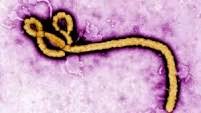
Ebola is a haemorrhagic disease caused by the Ebola virus, it was named after the Ebola river where the first outbreaks occurred in 1976 in the democratic Republic of Congo (formerly Zaire). It kills about 90% of its victims, is transmitted through contact with body secretions like sweat, saliva, urine, faeces, blood and semen through broken skin or mucous membrane. It has an incubation period (time of infection to manifestation of symptoms) of 2 -21 days. Patients become contagious when they are symptomatic. Symptoms initially begin with flu - like symptoms like catarrh, cough, then the patient develops fever, joint and muscle pains, sore throat, headache, weakness, vomiting, diarrhoea. A patient at this stage could easily be mistaken as having malaria.  At the terminal stages, the patient may develop internal or external bleeding from orifices (nose, mouth, ears e.t.c.) Women may experience heavy and irregular menstruation. It's primary hosts are animals like apes,  monkeys, fruit bats, even antelopes and porcupines.  Transmission from animals to man is also via contact, by handling these animals dead or alive. Prevention is by proper hand washing with soap and water, use of sanitizers, gloves and protective gears; avoidance unnecessary contact like handshakes; washing your fruits and vegetables properly before consumption; be alert and report any suspicious cases; lastly, fast, hands- off burial practices.

So, in a discussion somedays ago, someone asked a question and this is how it went, "if given a choice to choose between HIV, cancer or Ebola, which would you choose? Without wasting much time, I heard the response from someone else in the discussion,  "HIV". The reason for that answer was this; "people are now living comfortably with the disease, provided they follow the rules, they will be fine and they don't die within a month. That response took me back to a time when HIV was the most dreaded disease in Nigeria. HIV, the reason why lots of people committed suicide, the reason for so much stigmatisation, is now more desirable in comparison to the Ebola virus.  Now you can only begin to imagine the level of fear that struck Nigerians when the diagnosis of Ebola disease was made on the Liberian man -Patrick Sawyer 2 weeks ago.

When I heard of the probable outbreak of Ebola in Nigeria, my initial reaction was "why the hell did the Liberians allow their citizens leave their country? " Then, I thought "No, why didn't the Nigerian government shut down the airports to the affected countries as a preventive measure?" Anyway, whatever my reactions were is irrelevant now as the virus is already in the country. Right now, the next thought in my head is what do we do? You see, Nigerians are not the best when it comes to emergency response.  In fact, I really don't think we know the meaning of the words emergency preparation. Remember the floods of 2013,  how did the response to that go?  The general gist was that the government had been informed weeks earlier that a neighbouring country would be opening their dams, and Nigeria should put measures in place to cub any flooding.  I daresay, the level of response to that warning was at 0 level,  and the emergency response when the floods did ensue was at -0 level. So, now you understand that saying terror has struck Nigerians is actually an understatement. We are petrified! If the government couldn't so much as manage a disaster as flooding,  can someone please tell me how they hope to effectively combat a disease as virulent as Ebola?

At a time like this, I don't know if I should be thankful that the medical doctors are on strike. Most doctors know what to do theoretically,  but with the health sector as poor as it is, their hands are tied. The only disease similar to the Ebola, that we have had cause to manage is Lassa fever which is endemic to certain parts of the country. Now, the small doctors who know what to actually do are on strike, and the big oga doctors at the top,  all them commissioners,  directors and ministers of health who have been so out of touch, I wonder if they know the current treatment of malaria are in charge. We are in hot soup for sure. So tell me folks, how do you prevent a disease like Ebola in a country like Nigeria, where everyone's way of greeting is hugs and handshakes? A country where a simple procedure like quarantine is a big deal, a country where anything goes. A place where contact tracing for patients with tuberculosis is next to impossible.

As always, the first reaction to any bad news is denial. At the beginning, almost everyone said "it is yet to be confirmed, he's just a suspect because he's a Liberian". Then, it was confirmed and he passed on.  The story changed to "well no other person has been diagnosed of it, we'll do our best to keep it that way". They decide to spread the news of stop eating bush meat. For goodness sake Ebola is not endemic to Nigeria unless the animals from the affected countries cross over. The news begin to circulate in the media, whether WHO or United States said it or not.

I've actually been meaning to write this post for sometime now, but what actually prompted me into writing today is the treatment metted on me by the airline. An airline from which my wristwatch was stolen from inside my checked in luggage oh! (Story for another day). So I was flying back from Abuja yesterday,  and as the cabin crew carried out their usual take off routine,  I heard an announcement,  "because of the Ebola alert,  we are going to spray you with insecticide. If you are wearing contact lenses or you are allergic to it, we apologise." My jaw literally dropped!  Like for real??!!!.... How does spraying insecticide stop the spread of the disease? It is caused by a virus not an insect! It isn't even transmitted through insect bite. At this point,  I was thoroughly pissed! I just got out my pen and paper and began to write this post. Upon landing, I tried to educate the cabin crew on better ways to prevent the spread of the disease by wearing gloves for instance especially when sharing the food and handling overhead lockers, they should try to seat people with spaces between them especially when the craft is not full. One of the the crew members was glad for the advice,  (intelligent young man), the other one a lady decided to be a wise a**. (Why do women have to be so da***d difficult especially when you are a fellow female trying to correct them?) This is the discussion that ensued between us:

Hostess: what are you guys still doing in the plane? (Addressing her colleague and I)

Colleague: she's telling something useful that could help us as per the Ebola.

Me: I actually said, it would be safer if you shared food wearing gloves, it protects you and I.

Hostess: how would you feel if I served you wearing gloves? (Typical Nigerian way of answering a question or statement in this case with a question - sarcasm).

Me: I'll feel fine, knowing the situation of things in the country,  besides in other affected countries, people wear gloves as a way of life now, even to shake others.

Hostess: I would prefer to give a handshake wearing gloves than share food wearing gloves. If I was given food by someone wearing gloves,  I'll feel bad.

Me: really?  What's the difference?

Hostess: the doctor said we should spray insecticide. (Do you now understand my problem with non-practicing doctors who have no clue what to do?)

Me: your doctor is confused.  I am a doctor.

Colleague: waow!!!

And I walked off the plane. I get home and the story is even much worse. Apparently, my dear "Igbo brothers" have to bury their beloved relative who died in Liberia (cause of death - unknown) in the country. They go ahead to fly in the body. I'm almost certain they'd go ahead and do the proper wake keep where people can freely cry and touch the body and collect. Let me inform you now that the death of the host doesn't mean the death of the virus (a virus has both living and non living characteristics). It can be transmitted through contact with clothings too. Then I heard that the medical doctor that treated the Liberian has been diagnosed with the disease. One dumb Nigerian said it was the ploy of the doctors on strike to get more money. That the medical doctors brought Ebola into the country and would stop at nothing, no matter who gets hurt. Imagine such a response! (http://www.punchng.com/politics/doctor-who-treated-dead-liberian-tests-positive-to-ebola/).  Again our ogas at the top decided that the best way to combat the spread was to visit a prominent church pastor in Nigeria and ask him not to accept sick people from outside the country for healing.  Meanwhile the pastor thinks Ebola is a rumor (http://www.punchng. com/news/ebola-lasg-visits-synagogue-church/).

Dear Nigerians government where are your senses oh! Your sense of safety and obligation? After writing about this and thinking about it for so long,  I begin to ask the question "why doesn't this virus have a vaccine yet?" It's been there for over 3 decades now. Yellow fever is a haemorrhagic disease too yet it has a vaccine.  Is it because Ebola is not yet a pandemic? Then the news about bitter kola being able to inhibit the growth of the virus in the body. I dont know how true this is,  but read this http://news.bbc.co.uk/2/hi/health/411030.stm

So since the government is always letting us down, many Nigerians have found ways to relieve the tension. Many faced God (our only true source of hope right now), others decided to make some money through this, while the remainder tried to laugh it off.  Check out photos below

The person I got this from said it was the perfect description of Ebola since its first outbreak was near a river and it is scary.


Right now, I'm worn out, so dear Nigerians, I leave you with this little piece of advice, this is not the time to laugh or joke about everything. Prayer is good, but heaven helps those who help themselves.  Instead of using your phones for irrelevant facebooking and twittering,  go to Google at least and check out ways to help yourself and your community.  For now, it's entirely up to us.

Adios....